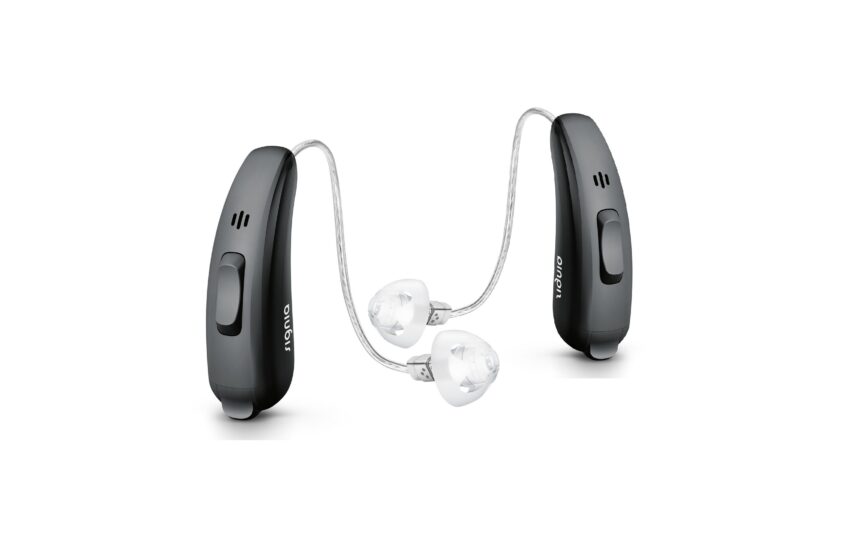
In January I became one of the approximately 5 million people in the U.S. who wear hearing aids. For at least 15 years prior to that I was one of about 24 million Americans who the NIH says would benefit from hearing aids but don’t have them.
Both of my parents and my brother developed significant hearing loss years ago, and the first evidence that I also had a hearing problem came when I started having trouble understanding two people in my life. One was a former classmate whom I visited periodically. When she was driving with me as a passenger, she occasionally muttered to herself — or so I thought; she was actually talking to me, and she wasn’t happy when I ignored her. The other person, unfortunately, was my boss. He had a tendency to lower his voice when he spoke on some sensitive topic in a staff meeting, and dropped it even further as he delivered the punch line of a funny anecdote. While everyone else at the table chuckled, I lurched forward and said “What?”
I can’t remember exactly when I first had a hearing test that showed my hearing was below normal, but I do remember that the audiologist, after telling me that I needed hearing aids, showed me a pair and said “These are the hearing aids you’re going to use.” There was no discussion of the merits of different types or the pros and cons of various manufacturers. It ticked me off. I said “I’ll think about it,” left and never went back.
For the most part I seemed to do OK for several years. I had little trouble understanding most people, the former classmate and I weren’t seeing each other as often, and when I retired I no longer had to worry about understanding my boss. But then I started accompanying my mother to her audiologist appointments. In browsing through the literature in the waiting room (and in subsequent research online) I learned that when hearing loss goes uncorrected for an extended period of time, the brain starts to lose its ability to interpret the signals that it’s no longer receiving from the auditory nerves. That means that people who wait too long to get hearing aids don’t benefit as much as they would have if they’d gotten them sooner. Their hearing deficit is no longer due only to a loss of auditory nerve function, it has become a neurological limitation.
Reading about that convinced me that it was time to revisit the possibility of getting hearing aids. I had been greatly impressed with my mother’s audiologist (Ryan Matoon of the Family Hearing Center in Lawrenceville, NJ) so I made an appointment with him to get another hearing test. Once again, my hearing proved to be below normal, but my understanding of spoken words was still pretty good. Ryan said he wasn’t sure that I would experience enough of an improvement in comprehension to make hearing aids seem worth the cost and the fuss. We agreed that I’d come back for another test a year later and see how I was doing.
But over the next few months, three things happened. First, I noticed I was more often having to ask my wife to repeat herself. She’d always been someone I had little trouble understanding. Second, I was sitting in my living room one evening with members of my neighborhood book group when someone on the other side of the room, not ten feet away, described the book he was reading and it was almost as if he was moving his lips without making any sound. While everyone else nodded in understanding, I picked up maybe every fifth word. But as shocking as that was, it was the third thing that was most persuasive: I read this article in the NY Times. It talks about the scientific evidence that has emerged over the last few years of a connection between uncorrected hearing loss and dementia. And it’s not just profound hearing loss that can lead to cognitive problems; even the slightest hearing loss is correlated with subsequent cognitive deficits. The next day I called Ryan and told him I wasn’t going to wait; I wanted to get hearing aids right away.
Unsurprisingly, Ryan made none of the mistakes that the earlier audiologist had made. He explained which manufacturers’ hearing aids were best suited to my type of hearing loss, he described the relative merits of various kinds of hearing aids, and he laid out the costs.
Hearing aids are expensive, and few health insurance plans, including Medicare, cover them. That’s undoubtedly why many of the people who would benefit from hearing aids don’t have them. Mine cost about $6,000. The only upside is that the initial cost covers all subsequent visits to the audiologist for the life of the hearing aids.
I handed over my credit card and Ryan ordered me a pair of Signia hearing aids. Five days later I went back to pick them up. I’ve been even happier with them than I expected to be. More on that tomorrow.