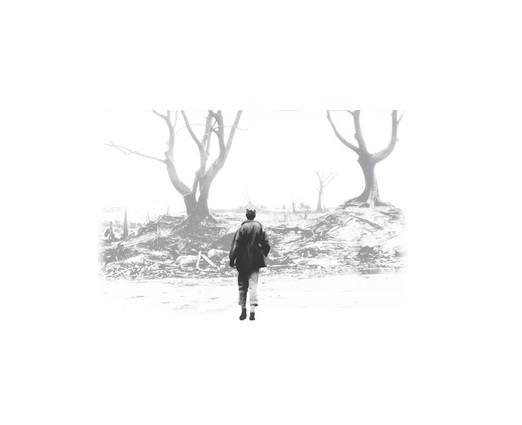
On August 6, 1945, the United States dropped an atomic bomb on Hiroshima, Japan. Three days later a second bomb was dropped on Nagasaki. Six days after that the Japanese surrendered.
While there were those who feared that the unleashing of atomic weapons would ultimately bring humanity to the brink of a nuclear holocaust, the vast majority of Americans endorsed the use of the bombs in Japan. The government’s position was that Japan gave every indication of being prepared to fight to the last man, meaning the war would have lasted another year or more and resulted in many more deaths than were lost to the bombings. And that may be true.
But what was not understood at the time was how horrible the bombs were for the residents of the target cities. In fact, the United States engaged in a propaganda and information suppression campaign to hide and deny the human toll of the new weapons. The cover-up worked for more than a year. By the first anniversary of the bombings in 1946, most journalists believed that the story of the bombings had been fully reported.
But then a journalist named John Hersey, writing for the New Yorker, revealed the truth. In May 1946 he got into Hiroshima, interviewed survivors, and wrote a story that related their horrific experiences. In an unprecedented move, the New Yorker devoted its entire August 31, 1946, issue to running Hersey’s 30,000-word story. It may have been the most consequential news story of all time.
This year, the 75th anniversary of the bombings, journalist and author Lesley M.M. Blume published Fallout: The Hiroshima Cover-up and the Reporter Who Revealed It to the World. I finished reading it yesterday. It is truly gripping— almost like reading an espionage thriller. Blume tells the story of how New Yorker editors Harold Ross and William Shawn became convinced that the full story of the bombings had not yet been told. Most of the coverage was either abstract or grandiose (one New York Times story described the bomb’s mushroom cloud as “a giant tree” bearing “deadly fruits”) and focused more on the bombs’ destruction of buildings than its effect on people. Ross and Shawn commissioned Hersey to go to Hiroshima and get the rest of the story.
While in China waiting for permission from U.S. forces to enter Japan, Hersey was on a side assignment in Manchuria when he came down with a bad case of the flu. He was transferred to a U.S. destroyer which took him back to Shanghai. Blume writes,
It turned out to be a fortuitous flu. As he convalesced onboard, crew members brought Hersey a few books from the ship’s library, including The Bridge of San Luis Rey by Thornton Wilder. The 1927 book detailed the lives of five people in Peru who were killed when a rope suspension bridge over a canyon broke and how these protagonists all found their way to that tragic moment.
Hersey realized that he could use Wilder’s approach to relate the human toll of the Hiroshima bombing in a compelling way. The story he would eventually write focused on six people, a priest, a pastor, two doctors, a widowed mother of three young children, and a clerk who was nearly crushed to death by office bookshelves that fell on her when the bomb went off.
Fallout relates the nature of the U.S. cover-up, including repeated denials that anyone exposed to the bomb was suffering from radiation sickness, and the intricate and secret planning by Ross, Shawn and Hersey to get Hersey into Hiroshima to get his story. It goes on to describes his contacts with survivors and the grim and gruesome experiences they recounted.
Other journalists who had gotten too close to the truth in Hiroshima or Nagasaki had seen their film go missing or their dispatches intercepted by occupation authorities, so Shawn advised Hersey to wait until he was back in the United States to actually write his story. After he did so, he, Ross and Shawn huddled secretly in Ross’s office editing and fact-checking the piece exhaustively. They wanted to ensure that there would be not a single inaccuracy that could be seized upon by critics to call into question the veracity of Hersey’s account.
No one else at the New Yorker had any idea what the August 31st issue would contain. Ross and Hersey even commissioned stories and art for the issue that they had no intention of running to avoid raising suspicions that anything unusual was in the works.
The article was a bombshell. And it profoundly altered public perceptions of the nature of atomic weapons. Many experts believe that Hersey’s article is a major reason such weapons have not been used since. At the time it was published there was consensus among government and military officials as well as ordinary citizens that atomic arms were legitimate weapons of war and would likely be used in the future. After it ran there was wide agreement, even among those who believed the use of the bombs in Japan was justified, that they were horrible weapons that must never be used again.
Some extensively researched histories are overwritten. You can feel as if you’re wading through a slough of extraneous details. Fallout is not one of those. At 191 pages, not counting the notes and index, it’s not a long book, and Blume keeps her story moving. (In her acknowledgments she thanks her editor who she says “shrewdly helped bring out the narrative from a mountain of material, and charmed his way through ordering often painful cuts to the manuscript.”)
Brevity aside, Blume keeps her story moving and makes you feel that you’re fully along for the ride.
I agree the Fallout is an excellent book. For anyone who wants a deep dive into the story about how the atomic bomb was developed, I would strongly recommend The Making of the Atomic Bomb by Richard Rhodes. It’s long and dense, but becomes absolutely spellbinding as the scientists of the Manhattan Project pull off the creation of “the gadget”, not realizing what they are about to unleash on the world. It’s a great work of scientific and human history.