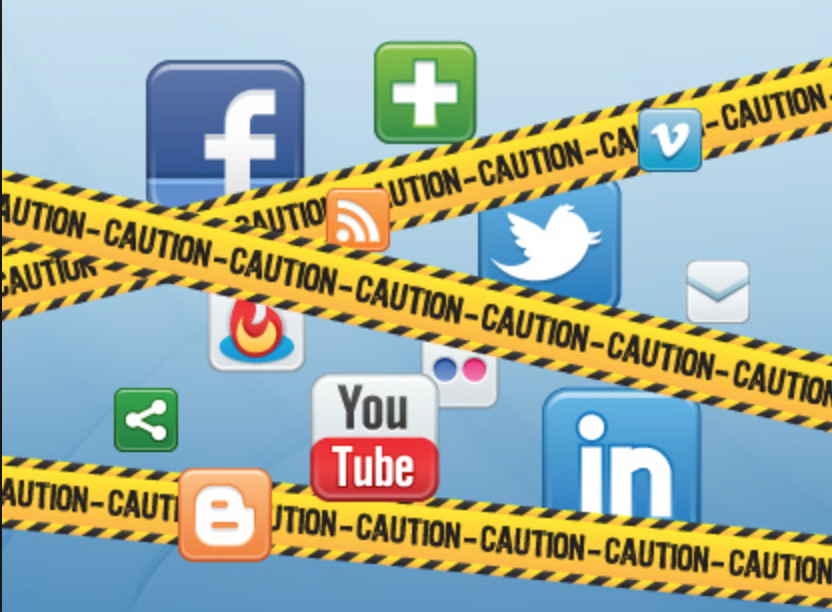
I read this interesting OpEd piece by Charlie Warzel in this morning’s New York Times about how Facebook’s newsfeed serves up “hyperpartisan rumormongering and conspiratorial misinformation” to tens of millions of Americans. “Touching family moments and Bible quotes that look like Hallmark cards” Warzel writes, are interspersed with hateful, vitriolic attacks and debunked conspiracy theories.
When many Americans joined Facebook a decade ago, it was truly a social networking site, a place where people could stay in touch with their family and friends. It was where you went to see photos of your niece’s baby or learn about a friend’s new hobby. But the people at Facebook realized there was a limit to how long any given user would spend on the site checking in on a finite number of friends each posting a finite number of comments and photos. In order to maximize its advertising revenues, Facebook had to find ways to keep it users on the site longer, and so its developers came up with the endless, scrolling newsfeed, filled with content algorithmically selected to stimulate the neural alert systems of Facebook users, commandeering their attention and keeping them scrolling, in some cases for hours a day.
Unfortunately, the content that best accomplishes that end is whatever triggers fear and alarm, such as hidden threats and shocking injustices. And thus that is what Facebook’s algorithms shovel into its users’ newsfeeds, provoking fear and outrage in the most primal regions of the brain and subverting the rational functioning of the neocortex.
Some of the vilest content, Warzel found, is in the comments posted by other Facebook users whose entire world view has been hijacked and perverted by the context-free rumor mongering and venomous fabrications served up by their newsfeeds.
Warzel doesn’t go so far as to say this, but I will: Facebook is destroying America. And it’s not alone. Twitter, Instagram, YouTube and all the other social media sites powered by algorithms to capture and hold the attention of their users are serving up a stew of hateful, divisive misinformation to tens of millions of Americans, and decimating the social fabric in the process.
There is a small glimmer of hope. What made Facebook compelling for its early users was its ability to connect them to friends and relatives. Given its millions of users, the so-called “network effect” meant that Facebook was the place you had to go to connect with other people because that’s where all those other people were. Thus, the bigger it got, the bigger it got.
But when Facebook shifted from being a social networking site to being a social media site, it sacrificed that advantage. There are lots of places you can go to find news, kitten videos and other random content; you don’t need Facebook for that. And so some people are finding other ways to stay in touch with the people they care about. Some have discovered apps like News Feed Eradicator, which allow them to use Facebook in a targeted way to communicate with loved ones or find new customers without exposing themselves to the refuse in their newsfeeds. Many are now using ongoing group texts to stay in touch, or more specialized social networking sites. Perhaps as the odiousness of Facebook, Twitter and other social media sites becomes apparent to more and more of their users, those users will increasingly find alternatives. We can only hope that happens because the future of our country, perhaps even the future of civilized society, depends on it. If that sounds absurdly alarmist, just wait.
Very interesting to read this in the context of the recent anti-trust suit against Facebook. I’m wondering whether increased competition would make the bad effects of social media better or worse.
I expect that a vigorous anti-trust action would partly mitigate one problem with Facebook but leave another one untouched. The problem it could address is that Facebook is a huge monopoly that swallows up potential competitors. No company should be that big and powerful or allowed to buy would-be competitors to maintain its monopoly. It’s bad for the economy and for our political system.
But an anti-trust suit would do nothing to address the existential threat that Facebook is to our society. Even if it had to sell off Instagram and WhatsApp, and were prevented from buying future competitors, it would still be getting better and better at hacking the attention and wasting the time of tens of millions of Americans, and shoveling divisive, conspiracy-laden content into their newsfeeds.