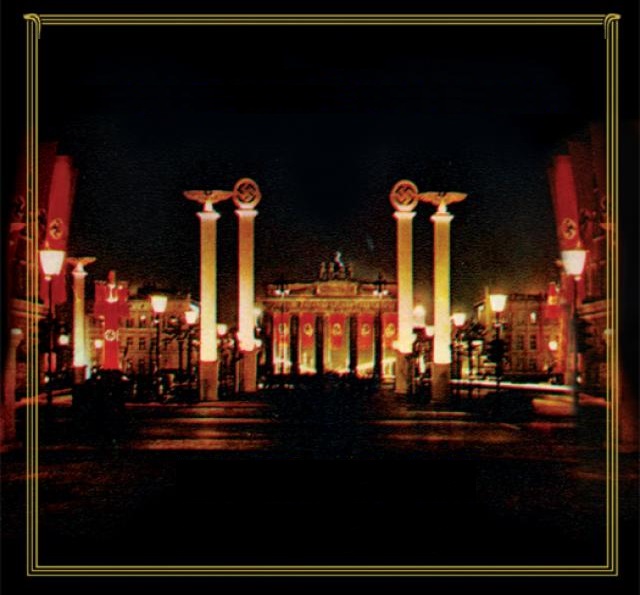
I just finished reading In the Garden of Beasts: Love, Terror, and an American Family in Hitler’s Berlin, Erik Larson’s recounting of the three and a half years that William E. Dodd spent as U.S. ambassador to Hitler’s Germany, from 1933 through 1937. It is excellent.
I read it because earlier this year I greatly enjoyed Larson’s latest book, The Splendid and the Vile: A Saga of Churchill, Family, and Defiance During the Blitz. That sent me looking for other books by Larson. He published In the Garden of Beasts in 2011.
William Dodd was a professor and chairman of the history department at the University of Chicago. He did not fit the mold of American ambassadors in the 1930s, most of whom came from wealthy families and had graduated from New England prep schools and Ivy League colleges. They typically spent lavishly out of their own pockets to host extravagant parties for government officials and their Foreign Service counterparts. It did not sit well with Dodd’s State Department colleagues that the relatively impecunious professor was determined to limit his spending as ambassador to his $17,500 government salary, the equivalent of about $350,000 in today’s dollars.
Dodd sailed to Germany with his wife Mattie, son Bill Jr., and daughter Martha in July 1933. The book’s two main foci are Dodd and Martha. She was what might have been called at the time a “loose woman.” A New York Times review of the book describes her as “indiscriminately flirtatious,” but her romantic entanglements with multiple men during her time in Germany went well beyond flirtation. Nonetheless, her dramatic approach to life and her abundant writing serve to the make the book richer as well as spicier.
Dodd was predisposed to admire Hitler’s government for reinvigorating the impoverished German state and raising the morale of its citizens. He did not think highly of Jewish people and was thus inclined at first to overlook the regime’s mounting antisemitism. Martha, we learn, was similarly predisposed.
But as Larson’s story illustrates, Dodd and his family gradually came to see how murderous and militaristic the Nazi regime was becoming. He lectured widely after returning to the U.S. to warn of the cataclysm that Hitler’s Germany threatened to wreak on Europe and the world, but his entreaties went largely ignored in a country that remained committedly isolationist throughout the 1930s.
As does The Splendid and the Vile, Beasts illuminates history by means of telling one family’s story — albeit a family that is exceptionally well-situated to witness that history. Larson’s novelistic approach allows us to see history as an interweaving of the lives of individual human beings, each with his or her own agendas, biases, strengths and foibles. The cerebral Dodd, who had little patience for what he saw as the shallow trappings of diplomacy, considered it his mandate from FDR to represent and stand up for American ideals. By the end of his tour of duty he was refusing to attend Hitler’s rallies and Nazi state functions, which exasperated senior officials in the U.S. State Department. By contrast, his successor as ambassador was an outright appeaser. In the end though, neither stance made a difference to Germany’s trajectory. Hitler was Hitler.
I agree Larson is a gifted writer. His first book of history (Issac’s Storm, about the disastrous 1900 hurricane hitting Galveston, Texas) is also outstanding.