I’ve noticed as I get older that kindness becomes more and more a priority for me. There was a time when I believed that there were certain circumstances that justified being less than kind — whether that meant scolding someone, or snarling at them, or even just rolling my eyes. But the excuses that I once believed justified being accusatory or rude no longer hold water for me.
When I participated in the Landmark Forum years ago, one of the topics discussed was “making people wrong,” — basically, assessing someone as being a less-than-good person because of something they’ve done or said — invalidating them, casting them in the role of “bad guy.” Making people wrong, the Landmark Forum leader suggested, is one of the things we human beings do to make ourselves right, and we’re addicted to being right. I’ve since come to believe that not only is making people wrong often counterproductive, it’s always counterproductive. I sometimes find myself doing it anyway, when I’m indignant, offended or hurt, but it never makes anything better.
The idea isn’t that we shouldn’t recognize when someone has done something we disapprove of, but rather that it’s the behavior we should object to, not the person. The other person may have a blind spot that prevents them from seeing the impact such behavior has on other people, or they may have an unconscious bias that causes them to see their behavior as justified, or they may have done what they did thoughtlessly and would take it back if they could. To cast them in the role of villain just engenders defensiveness and makes it harder to talk with them about what we object to and how they might behave differently.
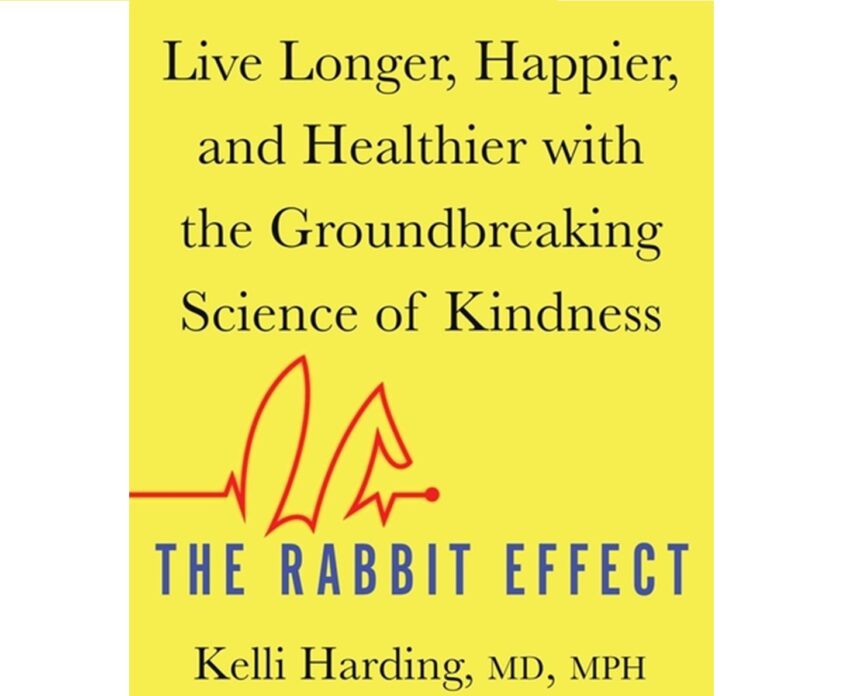
Several weeks ago I read about a book called The Rabbit Effect: Live Longer, Happier and Healthier with the Groundbreaking Science of Kindness, and given that kindness has been increasingly important to me, I decided to check it out. I finished reading it this week.
The “rabbit effect” of the title refers to a study done by a Dr. Robert Nerem in New Zealand in 1978, at a time when researchers were still trying to understand the relationship between cholesterol and heart disease. The study involved feeding white male rabbits a high-fat diet and then studying its effects. The rabbits were genetically identical and they all gained weight, seemingly destined to develop coronary disease. But when Dr. Nerem examined the rabbits’ blood vessels under a microscope, he was surprised to discover a large variation in the amount of arterial plaque in different rabbits. Given that there was no known biomedical explanation for this variation, Dr. Nerem went looking for the cause. It turned out that a newly hired postdoc named Murina Levesque had cared for some of the rabbits, and she handled them differently than any of her colleagues. When she fed the animals, she talked to them, cuddled them and petted them. All the rabbits that developed less arterial plaque had been under Murina’s care.
The Rabbit Effect is not, as I imagined, a self-help book that exhorts readers to be kind as a panacea for ensuring a healthy life. Rather, it’s a survey of a range of scientific evidence showing that “hidden factors” play an important role in our physical and mental health. These factors include how nurturing our relationships are, how fulfilling our work is, how safe our circumstances are, and the degree to which our environment is characterized by kindness, fairness, empathy and compassion.
The author, Kelly Harding, is an M.D. and board-certified psychiatrist at Columbia University Irving Medical Center. She’s spent more than a decade investigating the connection between mind and body, and its impact on health. Medicine, Dr. Harding asserts, is not simply the absence of disease. She describes two patients, one of whom appeared to be free of disease but who, at the age of forty-three, looked withered and acted much older. “She moved slowly and sighed when she sat down. At each clinical visit, she said she felt “foggy” and exhausted all the time.” She was debilitated by aches and pains.
The other patient was a much older woman who had pancreatic cancer and had “traveled a long road through surgery, chemotherapy, and radiation.” But despite all that, she “looked radiant, and seemed surprisingly youthful.” She was cheerful, sociable, and had few physical complaints.
The difference, Dr. Harding suggests, was that the first patient was buoyed by strolls with her son, a sense of community, and favorite hobbies, while the second suffered from isolation, missing her favorite cousin who had moved away, and a lack of engagement at work.
Dr. Harding cites a paper by Dr. George Engel, an internist at the University of Rochester School of Medicine, published in Science in 1977. In it he “questioned the widely held belief in American medicine that biology alone explains human illness.”
Dr. Engle saw medicine marching along a narrowly focused quest for physical markers of disease divorced from the broader context of human life. He warned that the ideology of the entrenched biomedical model was the “crippling flaw” of the field and not enough to explain human health. An incomplete truth adopted as a dangerous dogma.
In The Rabbit Effect, Dr. Harding endeavors to identify the factors that are overlooked by the biomedical model. Given its title, the book is a surprisingly fact-based treatment of the various ways in which psychological, sociological and other non-biomedical factors play a role in human health. She cites hundreds of studies that provide evidence for the importance of these “hidden factors.”
I’m often struck by the degree to which the scientific community assumes that it has achieved a more or less complete understanding of the natural world, despite the fact that history is full of scientific revolutions that have turned the current consensus on its head. The medical profession is as prone to that presumption as any other. But as Dr. Harding’s book makes clear, we are a long way from deciphering the mysteries of human health, and an attachment to a strictly biomedical model for solving those mysteries is an impediment to a deeper understanding.